


Window Coverings
Window Treatments
|
|
|---|
|
|
|---|
A variety of materials are available in window hardware. You have several options in terms of energy efficiency and design. Your personal preference, the climate and the style of your home will help you choose the right material for your house.
Types of Window Hardware
Wood
Wood has been the most common material used in window construction for generations. Wood is the easiest material to work with, either for a professional or a homeowner doing a DIY home improvement project. This material is most often used in custom work and intricately detailed designs. You have a wide range of options for painting and staining to fit every decorating need. This material is also very good in terms of energy efficiency.
The only downside of using wood is the maintenance needed. You will need to re paint or stain often. The peeling not only looks terrible, but will cause the wood to rot, if not maintained properly over the years. With good, regular maintenance, wood windows will last a long time.
Steel
Steel is most often found in older homes and basement windows. It is rarely used in newer homes because it is not very energy efficient. The heat from your home can easily escape through the frame of these windows. In addition, regular maintenance is needed. You must repaint steel regularly, or it will rust. Steel is a very durable material and is still used in hurricane storm shutters.
Aluminum
Aluminium is nearly as durable as steel. However, like steel, it is not very energy efficient and allows significant heat loss. This material does have one benefit over steel. It doesn’t require the frequent maintenance. The color of aluminium is baked on and a variety of colors are available. Repainting is not necessary.
Vinyl
Vinyl is an inexpensive and durable material for windows. In addition, vinyl is fairly energy efficient. In addition, vinyl windows are maintenance free. They don’t need to be painted. Vinyl is colored straight through, so you won’t ever see chips, scratches or peeling. A variety of colors are available to match your home’s decoration.
The biggest problem with vinyl is that it can look cheap. There are vinyl products that are made to look like wood, but the effect isn’t very good. They still have a plastic look.
Fibreglass
Fibreglass is a fairly new material for window construction. It is very durable and energy efficient. When insulated properly, it is one of the best in terms of energy efficiency. There is little heat loss with well insulated fibreglass windows. You will pay for this efficiency. These windows are among the most expensive.
Things to Consider When Choosing Window Hardware
Consider the climate where you live. If you live in a hot climate, you want to keep the heat out and the cold air in your home. Look for windows with a lower U value.
If you live in a colder climate, you want just the opposite: to keep the cold out and heat in. Heat loss is a major problem in cold climates and you’ll want to prevent this both through the frame and the glass. Choose energy efficient material and insulate it well. Consider insulated glass, which adds to the energy efficiency of the window. These products contain two layers of glass with argon gas in between the layers.
When replacing windows, consider the design of your home. You want the windows to match the architectural elements of your home. Make sure the material you choose fits in with the time period of your home. You won’t want wood, Colonial style windows on a modern Contemporary home.
About The Author
Charles Mahoney reveals many news to http://www.replacement-windows-tips.com an web site for information. The author is specializing in tips on window hardware ( http://www.replacement-windows-tips.com/window-hardware.html ).
|
One of the easiest and least expensive ways to transform the look of a room is to change the curtains and window coverings. Instead of using the same old curtain rod and drapes, try putting your imagination to work to see what you can come up after being inspired by the following ideas for curtains and window coverings.
One of the most popular ways of making your own window coverings is to buy a designer curtain rod and pinch clips. These pinch clips grip the edge of the fabric and allow you to hang any kind of material, hemmed or unhemmed from your window. A popular look is to buy wrought iron gothic style rods and clips and attach hemmed or unhemmed sheers or a swath of plain fabric.
This is a very romantic look that can also be achieved by simply attaching long white sheets, which are much cheaper than fabric from a store. You still get that billowy romantic look without the expense. Whether you use sheers or fabric this look is also very much improved by tying ribbons or ties as pullbacks to enhance the appearance of the window coverings.
You can also buy curtains and window coverings that don't require any type of clip that slides along the rod. These curtains, which come in a variety of designs and fabrics, simply boast loops at their edge that allows you to thread the curtain through the rod. It would also be very simple to make your own curtain like this by attaching ribbons or fabric strips with buttons to a length of fabric.
Curtains and window coverings made from specialty papers are also very popular right now. Hand made papers and rice papers make pleasing semi-transparent blinds that compliment many modern decors. These are quite expensive in most stores but it is easier than you think to make your own. All you need to do is find a store that specializes in selling handmade or specialty papers.
Some of these papers are gorgeous and feature details such as glitter, leaves or threads pressed right into mesh of the paper fibers. Once you buy the paper you simply cut it into the right dimensions that will cover your window. You then string the paper on wire and attach the paper with binder clips. Keep in mind that this type of window covering is best for rooms that still need light but need privacy such as a bathroom.
Another way to liven up your décor is to hang hand painted Venetian window blinds. These types of window coverings can be very expensive but you can achieve a similar look by creating a collage or painting your own. The best way to do this is simply take a stencil and spray-paint one solid design on the Venetian blinds. A stencil and a can of spray-paint can also be used to personalize simple roll down blinds with your favorite symbol as well
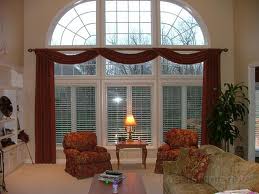
Always remember that your curtains and window coverings define the style of your room. The more elements that are added to your installation, such as pleats, swags, valences and jabots, the more formal your room will look. The fewer elements included in the overall design of your window treatment the more simple or rustic the total effect of your curtains and window coverings will be.
How to choose color schemes for your rooms' decor and window coverings.
The color that you choose greatly affects the décor and window coverings. Colors establish a mood and feel of a room, and when used properly can create different illusions. Using neutral or lighter colors such as grays and cream colors will give you an impression of spaciousness, where the darker colors can make a big room feel more intimate. Warming colors have the ability to make a room more cheerful and give it a livelier disposition. On the other end, cool colors are a more relaxing and soothing feel. When choosing your décor color scheme, consider the effect that you are trying to achieve. Sometimes it is tricky to choose the right tints, shades or the tones in order to get your desired look. So understanding how to use the color wheel can greatly help you in choosing your décor colors.
How does the color wheel work for decorating.
Time and effort spent first choosing your perfect color scheme will repay you back every time you enter your room or open your curtains First here are some basics using the color wheel. A monochromatic color scheme will use various intensities and values of just one color. Using this color style is relaxing since it allows your eye to flow from one shade into the next. This creates the illusion of space. Implementing patterns and textures into this scheme is recommended. Having two or three colors falling next to each other using the color wheel creates an analogous color scheme. So pick your favorite color as the dominant and accent with the others.
Here are some complimentary color schemes.
Two or more ways to choose your home decorating color would be complimentary color schemes, which are made up of two colors which are exact opposite from each other on the color wheel. Their style will produce a dramatic and unusually stimulating effect. This bold effect will be softened if you use one color as the predominant with the other color as an accent color. Split-complimentary is matching one color from the wheel not to its complimentary color but to a pair of colors on either side of its complimentary color. Red would be teamed not with green but with shades of yellow and blue green. Varying the intensities of colors will have the best effect.
About The Author
Daryl Plaza is the owner of: windowcoveringresource.com - a website focused on helping people to understand more about their window coverings and how important your décors designs are. We have resources and reviews on window coverings, window covering ideas and tips so you can learn more before you buy your window treatments.
|
|
|
|---|


